
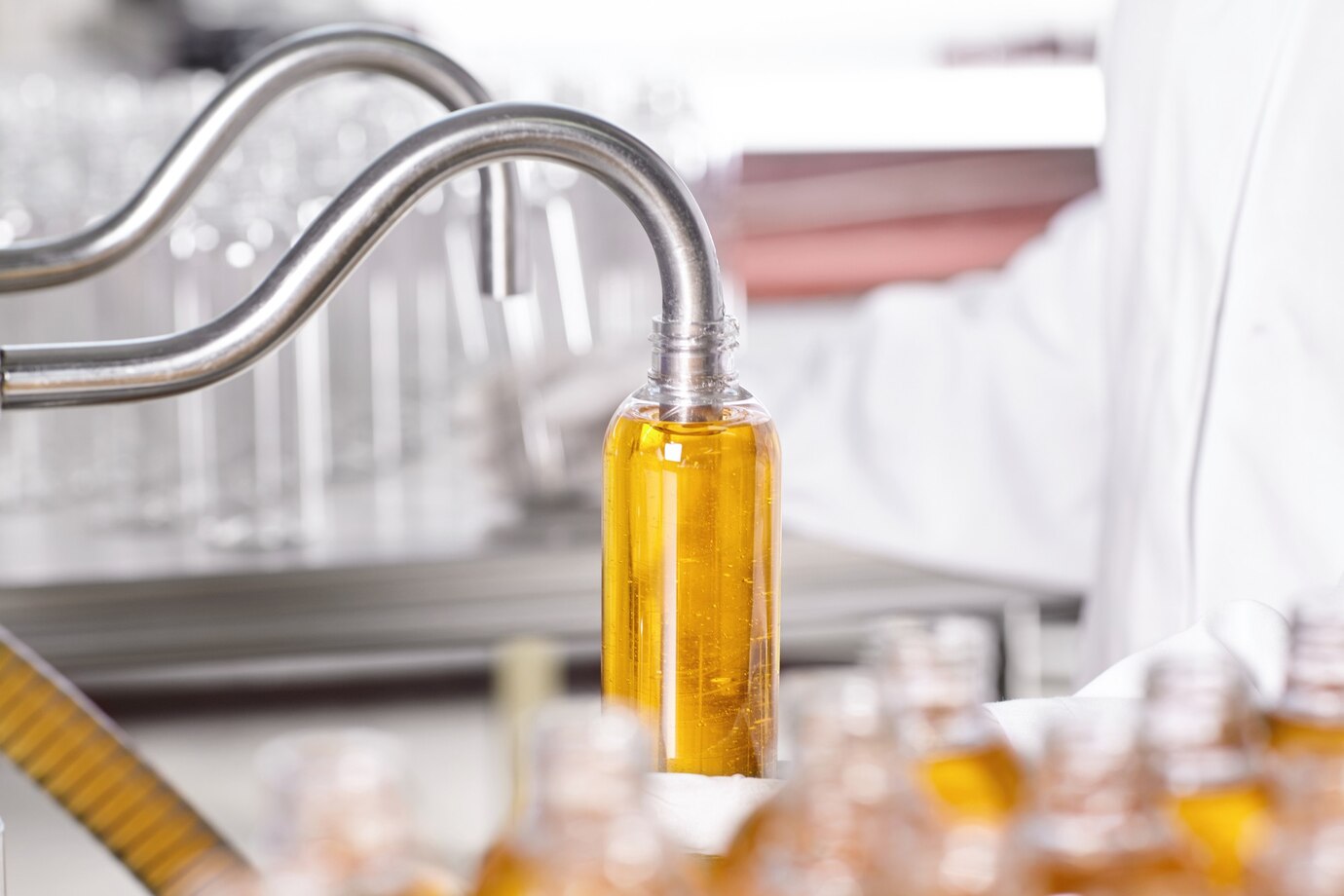
The global biopharmaceutical industry faces dual challenges of energy security and green transition. According to the International Energy Agency (IEA), the average energy intensity of biopharmaceutical companies in 2023 increased by 45% compared to 2010, while power outages caused hourly losses of 500,000to500,000to2 million in R&D disruptions. Under carbon neutrality goals, industrial energy storage technologies—from lithium batteries to hydrogen—have become critical solutions. By 2025, the global biopharmaceutical energy storage market is projected to exceed $3.2 billion (BloombergNEF), supporting highsensitivity scenarios such as vaccine production, ultralowtemperature storage, and digitalized laboratories. This guide analyzes global case studies, technological pathways, economic models, and policy frameworks to deliver actionable energy resilience strategies for the industry.
Global Market Landscape: Surging Demand and Regional Dynamics
North America: PolicyDriven "Zero Blackout" Experiments
The U.S. Inflation Reduction Act offers a 30% tax credit for energy storage projects, accelerating deployments. In 2024, Moderna’s Boston facility integrated Tesla Megapack systems (20MWh capacity), achieving 99.999% power reliability for critical production lines and annual savings of $1.2 million in operational costs (company filings). The California Energy Commission predicts that biopharmaceutical storage will account for 18% of the state’s industrial energy storage capacity by 2025. Europe: Green Certification Spurs Technological UpgradesThe EU’s Pharmaceutical Environmental Footprint Guidelines mandate 100% renewable energy use in drug manufacturing by 2030. Novartis’ Basel facility deployed a hybrid "solarstoragehydrogen" system: rooftop solar (5MW) + vanadium flow batteries (8MWh) + green hydrogen backup, reducing carbon footprint by 62% (McKinsey case study). Fraunhofer Institute simulations show similar models could lower European pharma energy costs from €0.22/kWh to €0.15/kWh by 2025. Asia: Leapfrogging Opportunities in Emerging Markets
China’s 14th FiveYear Plan subsidizes energy storage in biopharma parks. WuXi Biologics’ Wuxi campus uses CATL lithium iron phosphate batteries (50MWh) with AI scheduling algorithms, generating over $1.1 million annually from peakvalley arbitrage (company report). The Serum Institute of India plans a distributed storage network by 2025 to safeguard vaccine cold chains—World Bank estimates suggest this could reduce vaccine wastage in developing countries by 30%.
Core Application Scenarios and Value Propositions
Scenario 1: Uninterrupted Power for Bioreactors
A onehour shutdown in monoclonal antibody or mRNA production can lead to multimilliondollar losses. Pfizer’s New York plant adopted a flywheellithium hybrid system, achieving 0.1second grid failure response in 2023 and saving a $120 million batch (Reuters). ABI Research forecasts that 60% of largescale bioreactors globally will integrate subsecond response storage by 2025.Scenario 2: EnergyEfficient UltraLowTemperature Storage
Global 80°C freezers consume energy equivalent to 300,000 households annually. Thermo Fisher Scientific and ENERGY Vault’s gravity storage + phasechange material solution cuts energy use by 40% (Nature Energy). Modeling shows that if top 10 pharma firms retrofit cold storage by 2025, annual CO₂ reductions could reach 4.8 million tons.Scenario 3: AIDriven Lab Power Optimization
AlphaFold3 and AI tools escalate computational demands. Google DeepMind and GSK’s UK microgrid uses realtime energy pricing algorithms to optimize power usage effectiveness (PUE) from 1.6 to 1.2 (project whitepaper). IDC predicts 75% of AIdriven drug discovery labs will adopt such models by 2025.
From Cost Center to Value Engine
Industrial energy storage is redefining biopharma’s energy paradigm. By 2025, sodiumion batteries (costs falling to $50/kWh) and digital twin integration will transform storage systems from "emergency backups" to "profit drivers"—generating 30%+ ROI through virtual power plants and carbon credit trading (Boston Consulting Group). As EU carbon tariffs target APIs and FDA integrates energy resilience into GMP standards, storage capabilities will become a core competitive edge. This silent energy revolution will ultimately accelerate the race to save lives.
Latest News



Ms. Liu +86 132 6100 0097

Host: Jiangsu Energy Storage Industry Association
Co organizers: New Energy Chamber of Commerce of All China Federation of Industry and Commerce, Electric Power Planning and Design Institute
Supporting units: Jiangsu Provincial Development and Reform Commission, Jiangsu Provincial Department of Industry and Information Technology, Jiangsu Provincial Department of Commerce
State Grid Jiangsu Electric Power Co., Ltd
International support: Asia-Pacific Council for Renewable Energy (RECAP), European Association for Energy Storage, Australian Smart Energy Council, Korea International Electric Vehicle Association, Vietnam Chamber of Commerce and Industry, Ministry of Science and Technology of Laos
Organizer: Chuangneng International Exhibition Service (Jiangsu) Co., Ltd., Donghao Lansheng Exhibition Group Co., Ltd
Liyang Deepwater Technology Consulting Co., Ltd
Follow us
Get all the latest information about events, sales, and promotions. Subscription to Newsletter:

Mini Program

WeChat Official Account
Copyright © 2024 Jiangsu Energy Storage Industry Association All rights reserved |  苏ICP备2021053254号-5 | supported by Starify AI